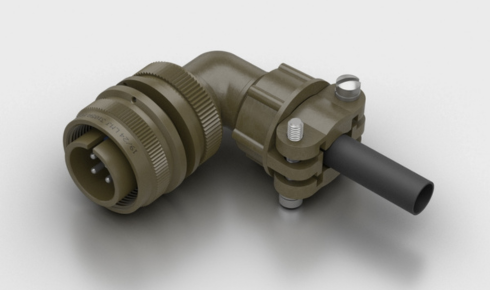
Very few engineering standards survive for more than seven decades without being replaced. MIL-DTL-5015, the specification that governs one of the most widely used families of circular military connectors in the world, is one of those rare survivors. First published in the United States in the 1940s as MIL-C-5015, it continues to be specified today on military vehicles, ground support equipment, locomotives, power plants and heavy industrial machinery across the globe, including in India. For design engineers and procurement teams, understanding what this standard covers and why it endures is essential when selecting interconnection hardware for demanding applications.
What MIL-DTL-5015 Actually Covers
MIL-DTL-5015 defines a family of circular connectors with threaded coupling, available with solder or crimp contacts, in a wide range of shell sizes and insert arrangements. A single connector under this specification can carry anywhere from one heavy power contact to more than a hundred fine signal contacts, which is why the family is so versatile. The standard also defines service classes that determine how well a connector resists moisture, vibration, fluids and temperature extremes, allowing an engineer to match the connector construction precisely to the operating environment.
Because the specification is public and mature, connectors built to it are intermateable and interchangeable across manufacturers. A plug made by one qualified supplier will mate reliably with a receptacle made by another, provided both conform to the standard. For defence programmes and long-life industrial equipment, this interchangeability is a form of insurance: spares remain available for decades, and no single vendor can hold a project hostage.
Why the Standard Endures
The obvious question is why an interconnect design conceived in the 1940s has not been retired. The answer lies in its proven field record. Billions of mating cycles across aircraft, tanks, ships, locomotives and factories have validated the design in a way no laboratory programme could. When an engineer specifies MIL DTL 5015 connectors today, they are choosing a known quantity whose failure modes, derating behaviour and maintenance practices are thoroughly documented. In safety-critical and mission-critical systems, that predictability is worth far more than novelty.
The enormous installed base also matters. Equipment already fitted with 5015-style interconnects must be maintained, repaired and upgraded, which keeps demand steady. New designs frequently adopt the same family simply to stay compatible with existing cabling, tooling and technician skills.
Construction and Key Variants
A typical connector in this family consists of a machined or die-cast metal shell, a resilient insulating insert, and machined contacts. The shell provides mechanical protection, environmental sealing and, when properly terminated, a path for electromagnetic shielding. Inserts are available in dozens of standard arrangements, mixing contact sizes so that power and signal can share a single shell. Plating options range from traditional olive drab cadmium to modern RoHS-compliant finishes that meet current environmental regulations without sacrificing corrosion resistance.
Coupling Styles and Related Ranges
The classic 5015 coupling is a threaded ring, which offers excellent resistance to loosening when combined with proper torque. For applications with severe vibration, such as tracked vehicles and rolling stock, reverse bayonet coupling variants developed under the German VG specifications provide faster mating and positive locking. Ranges such as MG connectors, built to VG 95234, are functionally close cousins of the 5015 family and are frequently specified alongside it on military and railway platforms where quick, tool-free coupling is preferred.
Selecting the Right Connector for Your Application
Selection begins with the electrical load: count the circuits, note the current on each, and identify the wire gauges involved. Next comes the environment. Will the connector face rain, washdown, salt spray or fuel exposure? An IP67-rated construction in mated condition may be necessary. Consider temperature extremes, both from the surroundings and from self-heating of power contacts. Finally, think about serviceability: crimp contacts with rear release allow field repair without soldering irons, a significant advantage for equipment deployed far from workshops.
Accessories deserve equal attention. Cable clamps provide strain relief that protects terminations from flexing loads, while backshells and shielding hardware determine how well the assembly resists electromagnetic interference. A well-chosen connector let down by a poor accessory selection will still fail in the field.
The Indian Context
India presents a particularly interesting market for this connector family. Defence indigenisation policies have pushed programmes to source qualified interconnects domestically, and Indian manufacturers of multipin military connectors now hold qualification approvals from the Ministry of Defence for ranges built to MIL and VG specifications. The railways, power sector and machine tool industry have followed the same path, adopting mil grade connectors for their reliability and then benefiting from local availability, shorter lead times and lifecycle support that imported alternatives struggle to match. Allied Electronics Corporation, established in Mumbai in 1966, is one example of how deep this domestic capability now runs.
Conclusion
MIL-DTL-5015 connectors have earned their longevity through decades of dependable service in the harshest conditions engineers can devise. If you are specifying interconnects for defence, rail, power or heavy industrial equipment, start with the qualified ranges, study the insert arrangements against your circuit list, and involve the manufacturer’s application engineers early. A short technical conversation at the design stage costs nothing and can prevent years of field trouble.
Hyperlink Summary
- Anchor Text 1: “MIL DTL 5015 connectors” → https://aecconnectors.com/ms-connectors.html
- Anchor Text 2: “MG connectors” → https://aecconnectors.com/mg-connectors.html
- Anchor Text 3: “multipin military connectors” → https://aecconnectors.com/