Water plays a much bigger role in business than many people realize. Restaurants use it for cooking, cleaning, and dishwashing. Hotels depend on it for guest rooms and laundry. Manufacturing facilities may use huge volumes in production processes. Even a small office relies on dependable water every day.
When water quality causes problems, the effects can go beyond an unpleasant taste. Hard minerals can create scale, sediment can affect equipment, and certain water conditions may interfere with daily operations. That’s why choosing the right commercial treatment system deserves more thought than simply buying the first product recommended by a salesperson.
Start With the Water, Not the Equipment
The first question shouldn’t be, “Which system should we buy?” It should be, “What is actually happening with our water?”
Water sources vary, and commercial properties have different demands. A busy restaurant may have very different requirements from a hotel or manufacturing facility. Hardness, sediment, taste, odor, and other characteristics can all influence the treatment approach.
Water testing is a useful starting point. It can help identify hardness levels and other relevant characteristics, giving a business a clearer picture of what needs to be addressed.
Without that information, it’s easy to spend money on equipment that isn’t solving the main problem.
Why Commercial Water Softeners Matter
Hard water contains minerals such as calcium and magnesium. These minerals aren’t necessarily a safety concern, but they can create operational headaches when they build up over time.
For businesses with high water usage, properly sized commercial water softeners can help manage hardness and reduce scale formation in suitable applications.
This can be particularly useful for facilities that depend heavily on water heaters, boilers, dishwashers, laundry equipment, or other water-using machinery. Less mineral buildup can make cleaning easier and may help equipment operate more efficiently, depending on the specific conditions.
However, sizing is crucial. Commercial systems need to account for flow rates, peak demand, water hardness, operating schedules, and regeneration requirements. A system that works perfectly in a home may be completely inadequate for a busy commercial facility.
Filtration for Different Water Concerns
Softening isn’t the same thing as filtration. This distinction is easy to miss when you’re comparing treatment options.
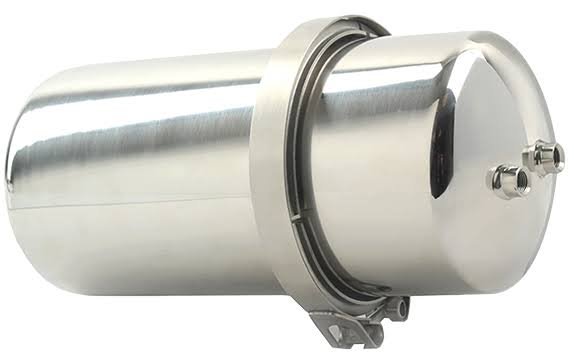
Commercial water filters can be designed for different purposes, including sediment reduction, taste and odor improvement, and reduction of specific substances. The appropriate filter depends on the water quality and the business’s intended use.
For example, a restaurant may prioritize water taste and clarity because customers notice what’s in their glass and food. A manufacturing facility might be more concerned about protecting sensitive equipment or meeting process-water requirements.
The point is simple: filtration should be selected according to the job it needs to perform.
When Commercial Reverse Osmosis Makes Sense
Some businesses need more extensive treatment for water used in specific processes or for drinking and food preparation.
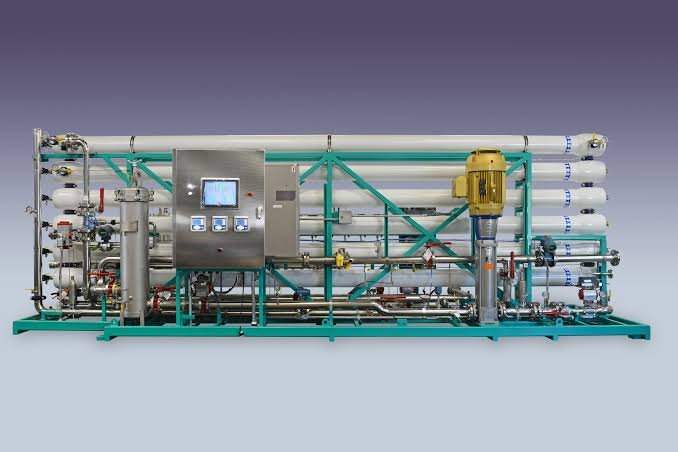
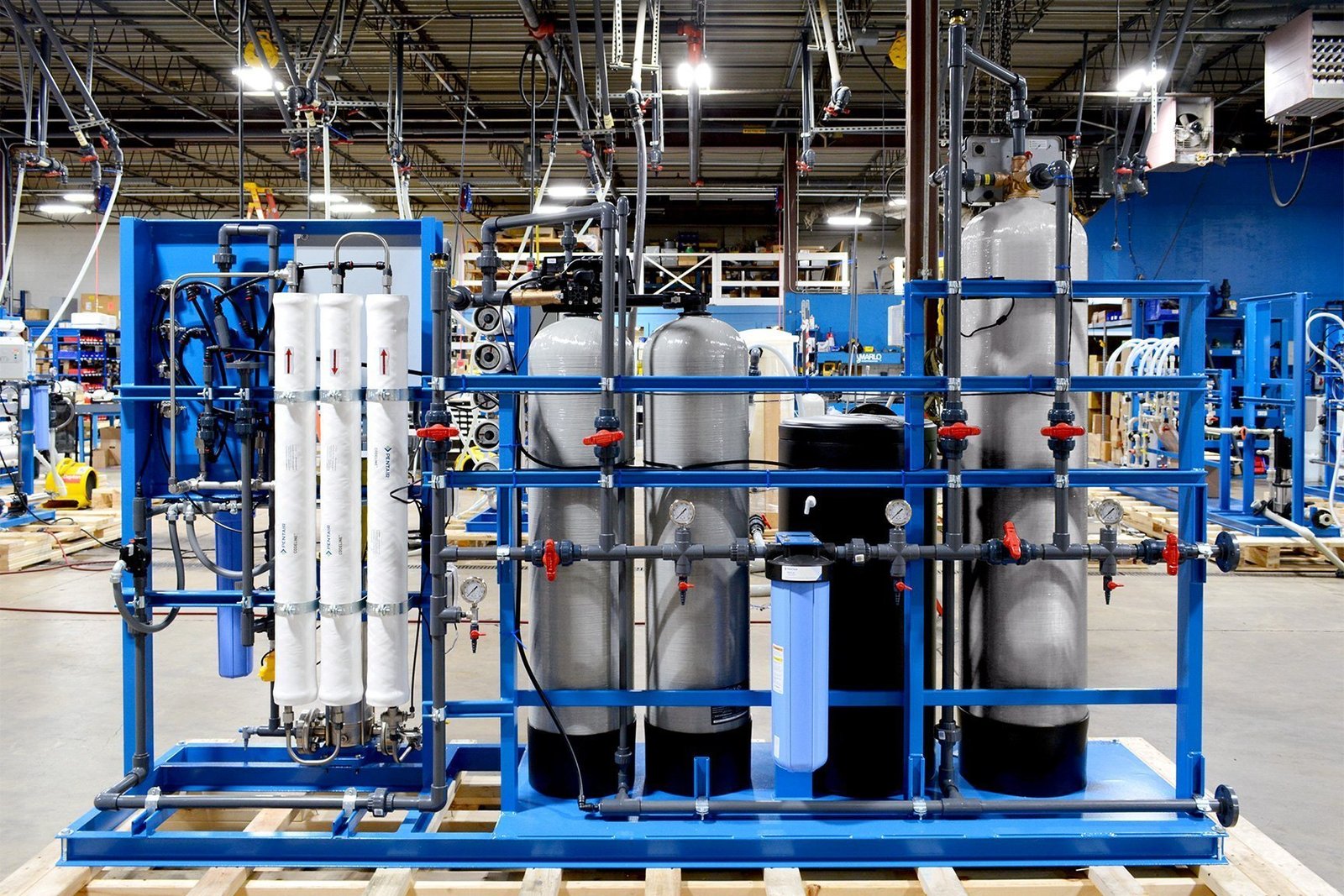
Commercial reverse osmosis systems use a semipermeable membrane to reduce many dissolved substances from water. Depending on the system and its configuration, reverse osmosis can be used in restaurants, hospitality settings, laboratories, food-service operations, and other applications where treated water is important.
But reverse osmosis isn’t automatically the best answer for every business. It has specific installation, maintenance, pressure, and wastewater considerations.
Pretreating the water may also be necessary to protect the membrane and maintain performance. This is another reason testing and professional system design matter.
Think About Peak Water Demand
Commercial water use isn’t always consistent throughout the day.
A restaurant might experience a major spike before lunch and dinner. A hotel may have heavy demand in the morning. A manufacturing operation could have water-intensive processes running on a particular schedule.
A treatment system needs to handle these peaks rather than merely average daily consumption.
If a system is undersized, it may struggle during busy periods. If it’s significantly oversized, the business may be paying for capacity it rarely uses.
Good system design finds the practical middle ground.
Maintenance Should Be Planned From Day One
Water treatment equipment requires maintenance. Filters need replacement, softeners require regeneration, membranes need servicing, and valves or other components may eventually need attention.
For a business, maintenance isn’t just about protecting the equipment. It’s also about avoiding unexpected downtime.
A restaurant that suddenly loses treated water during a busy service has a much bigger problem than a homeowner who discovers a filter needs changing.
Create a maintenance schedule and assign responsibility for it. Depending on the equipment and business, professional service may be worthwhile. Preventive maintenance is usually easier to manage than emergency repairs.
Don’t Focus Only on the Purchase Price
Commercial treatment systems are long-term investments, so the initial price doesn’t tell the whole story.
Consider installation, replacement filters, salt, membrane replacement, electricity, water usage, servicing, and potential repairs. Ask about the expected operating costs before signing a contract.
A system that costs slightly more upfront may provide better value if it has reliable components and manageable maintenance requirements. On the other hand, expensive equipment isn’t automatically better.
Look at the complete cost over several years, not just the number on the initial quote.
Work With a Provider Who Understands Commercial Needs
Commercial water treatment is different from residential treatment. The equipment is often larger, the water demand is higher, and downtime can have a direct impact on revenue.
A good provider should take time to understand the facility, water source, usage patterns, and operational goals. They should be able to explain why a particular system is recommended and what ongoing maintenance will involve.
Don’t hesitate to ask practical questions. What happens if the system needs service? Are replacement components readily available? How often should the equipment be inspected? Can the system be expanded if water demand increases?
Clear answers are worth a lot.
A Smarter Investment in Business Operations
Water treatment isn’t just about getting cleaner water. For many businesses, it’s about protecting equipment, supporting consistent operations, reducing maintenance problems, and making everyday processes more reliable.
The right system starts with accurate information. Test the water, understand the property’s demand, identify the actual problem, and choose technology that addresses it.
Whether a business needs softening, filtration, reverse osmosis, or a combination of treatment methods, there shouldn’t be a rush to buy the most complicated setup available.
A well-designed system should quietly support the business in the background. When employees can focus on their work, equipment operates as expected, and water quality doesn’t become an everyday headache, the investment has done what it was supposed to do.